Bedding & sleep comfort
Wool Bedding Layers: Breathability, Moisture Control, and Care
A wool layer can bring softness to a bed without turning it into a heat trap. Here’s how wool manages moisture and temperature, what to look for in a mattress pad or topper, and how to care for it so it keeps its shape and feel.
Some bedding feels lovely at bedtime, then becomes too warm a few hours later. Wool offers a different kind of comfort: rather than simply adding a plush layer, its fibers can help moderate the small changes in warmth and humidity that happen as you sleep. That makes wool bedding worth considering for people who want cushioning and a more breathable-feeling surface, without assuming that extra softness has to mean extra heat.
Wool mattress pads and toppers are not all alike. The amount and type of wool, the fabric that surrounds it, the quilting, the fit, and—particularly—the care label all affect how a layer performs in everyday use. Understanding those details can make it easier to choose a piece that suits your bed and routine, whether you are looking to refresh a guest mattress or make your everyday sleep surface feel a little more comfortable.
What wool brings to a bedding layer
Wool fibers have a naturally crimped structure, which helps create pockets of air in a wool-filled layer. Those pockets contribute to insulation, while the material’s ability to interact with moisture helps keep the sleep surface from feeling clammy. Wool can absorb moisture vapor and later release it into the surrounding air, depending on conditions. This does not mean that a wool pad eliminates sweating or controls room humidity; it means the fiber can help manage some moisture close to the body.
That balance is one reason wool appears in bedding intended for use across changing seasons. It can feel insulating when a room is cool, yet breathable construction may prevent the heavy, sealed-in sensation some sleepers associate with overly dense layers. The result depends on the whole setup, of course. A wool pad beneath tightly woven, non-breathable bedding will not behave exactly like one paired with airy sheets and a comfortable room temperature.
Wool also adds a tactile change. Depending on its fill weight and construction, a mattress layer might feel gently cushioned, springy, or more substantial. It generally will not transform a very firm mattress into a deeply plush one, nor can it correct a mattress that no longer provides appropriate support. Think of a pad or topper as a comfort adjustment—not a substitute for the mattress beneath it.
Breathability and moisture: useful, not magical
“Breathable bedding” is often used as shorthand for a sleep surface that does not feel stuffy. In practice, breathability is influenced by several things at once: the fiber, the density of the fill, the cover fabric, the quilting pattern, the fitted sheet, and the conditions in the room. Wool may support a more comfortable microclimate, but it cannot guarantee that every sleeper will feel cool or dry.
People differ in how warm they sleep, and bedrooms differ in ventilation and temperature. A person who tends to wake warm may appreciate wool’s moisture-handling properties, but should still consider the full bedding stack. A thick protector, synthetic comforter, and heavy blanket can all affect how much warmth is retained. Conversely, a lightweight wool layer with breathable sheets may feel pleasant in a room that runs cool.
It is also helpful to distinguish moisture management from waterproofing. Wool-filled bedding is not automatically a spill barrier, and natural fibers can still be affected by liquids. If protecting a mattress from accidents or spills is a priority, check whether the product has a separate waterproof component. A wool pad’s comfort benefits should not be mistaken for the function of a waterproof mattress protector.
Wool mattress pad or topper: what is the difference?
Product names are not always used consistently, so compare construction rather than relying on the label alone. A mattress pad is often a relatively thin layer designed to add a modest amount of softness and help shield the mattress from routine wear. It may attach like a fitted sheet, use corner straps, or sit flat beneath the fitted sheet. A topper is commonly thicker and intended to make a more noticeable change to the feel of the bed, though there is no universal thickness rule.
For a gentle comfort update, a thinner wool pad may be enough. If you are hoping to alter pressure or surface feel more substantially, examine the fill weight and depth, and remember that wool compresses with use. A thicker product may provide more cushioning, but it can also be heavier, warmer, more involved to rotate, or harder to wash. The right choice is not necessarily the fullest one: it is the one that addresses the comfort issue without making the bed difficult to manage.
Neither a pad nor a topper should be expected to repair sagging or structural wear. If the mattress has a pronounced dip, unstable support, or damage, adding a soft layer may temporarily disguise the problem rather than solve it. Assess the mattress itself before investing in another layer.
Compare the cover fabric and construction
The outer fabric is in direct contact with the rest of the bedding, so it matters almost as much as the wool inside. Cotton covers are common and can offer a familiar, breathable surface. Organic cotton may appeal to shoppers who are looking for products made with certified organic textiles, but claims and standards vary. Check the product’s actual certification information rather than relying on broad terms such as “natural” or “eco-friendly.”
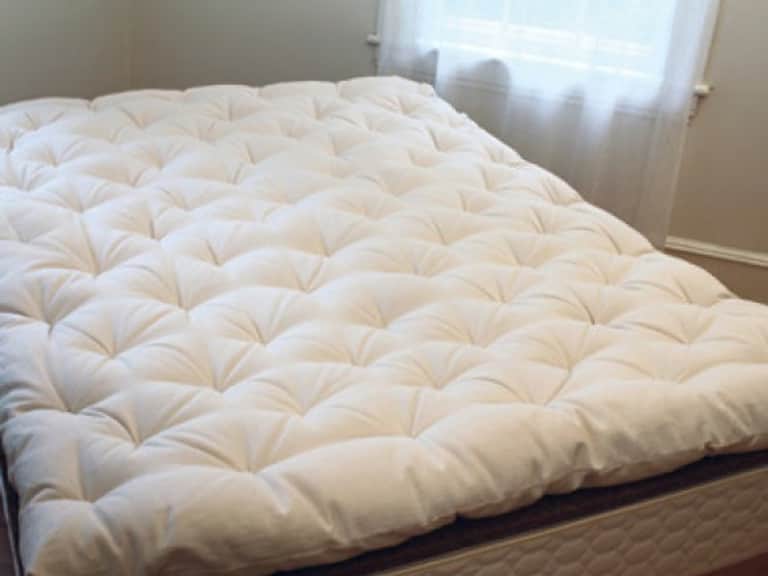
Look at how the wool is held in place. Quilting, stitching, or hand tufting can help limit shifting, while the spacing and pattern may affect how evenly the layer feels. A well-secured fill is less likely to migrate into lumps or empty patches during ordinary use. Still, all natural fill can compress over time, and no construction detail makes a bedding layer immune to wear.
Fit deserves a careful check. Confirm the mattress dimensions and the depth of its sides before ordering. A fitted-style pad may have elastic corners or a skirt designed to stretch around a particular mattress depth. A layer that is too small can pull away from the edges; one that is too large may bunch beneath the sheet. Also consider whether a thicker topper will make the fitted sheets you already own difficult to secure.
Finally, note the product’s fill weight or stated thickness when available. Two wool pads can look similar in a brief description while offering very different levels of loft. Ask whether the listed dimensions refer to the pad itself, whether the wool is washable, and whether the stated care applies to the entire item or only to a removable cover.
How to care for wool bedding
Care instructions vary widely, and the most important rule is also the least glamorous: follow the label for the specific item. Some wool pads are designed for machine washing; others recommend spot cleaning, limited washing, or professional care. Wool fibers can shrink, felt, or lose their shape when exposed to unsuitable heat, agitation, or detergents. A method that works for one product may damage another.
Before washing, check the cover, seams, elastic, and any care tag. Look for instructions about water temperature, detergent, spin cycle, tumble drying, and whether the product should be air-dried. If machine washing is permitted, use only the stated settings. Avoid adding bleach or fabric softener unless the manufacturer explicitly says it is acceptable. When a label calls for spot cleaning, treat that as a real limit rather than an invitation to put the item through a full wash.
Drying deserves particular attention. A thick wool-filled layer can hold moisture within its construction even when the surface feels dry. Make sure it is completely dry before returning it to the bed or putting it away; lingering dampness can create unpleasant odors and may damage textiles. If the instructions recommend air-drying, lay the item as directed and allow plenty of time. Do not assume high heat will speed things up safely.
For routine upkeep, airing the bedding in a dry, well-ventilated space may help it feel fresher between washes. Follow the maker’s guidance about sunlight and exposure. Rotate or reposition the layer occasionally if its design allows, especially if one area receives more pressure than another. Avoid aggressive shaking or pulling that could stress the quilting and seams.
Storage and everyday handling
When the season changes or a guest room is being cleared, store wool bedding only after it is clean and thoroughly dry. A breathable storage bag or clean cotton cover can help protect it from dust while allowing some air circulation. Avoid compressing the layer under heavy objects for a long period; prolonged pressure may flatten the fill. A cool, dry cupboard is generally preferable to a damp basement, a hot attic, or a sealed container that traps moisture.
Wool pads can be heavier than their soft appearance suggests, particularly in larger sizes. When lifting one, support it evenly instead of tugging at a corner or elastic strap. This is especially useful for fitted models, where repeated pulling can strain the attachment points. If the mattress is difficult to move, fold the bedding gently as instructed rather than dragging it across the floor.
Who might appreciate a wool layer?
Wool bedding may suit people who want a natural-fiber layer with a little cushioning and a breathable feel. It can be a reasonable option for a bedroom that experiences temperature changes, for a guest bed that needs a comfortable finishing touch, or for someone who prefers to research fiber and construction before choosing bedding. Its appeal is practical as well as sensory: it offers a distinct alternative to down, cotton fill, and synthetic padding.
It may be less convenient for anyone who needs bedding that can be washed frequently and without special handling. A wool pad with limited-care instructions can require more planning than a simple machine-washable layer. People with wool sensitivities should also review product details and consider whether the fiber is enclosed, since the cover, seams, or contact with the material may matter to them. For persistent allergies or skin concerns, a qualified health professional can offer individual guidance.
Families choosing bedding for a baby or young child should follow current safe-sleep guidance and the child’s mattress instructions. A topper or pad should never be added to a crib sleep surface unless it is specifically intended for that setting and is consistent with applicable safety guidance. A product’s natural materials or certification do not, on their own, establish that it is suitable for every age or use.
A simple checklist before you choose
- Identify the goal: Are you seeking a subtle comfort change, a more cushioned surface, or help with a mattress protector function? These needs may call for different products.
- Check the measurements: Match the pad to your mattress size and depth, and account for any existing topper.
- Read the construction details: Compare wool fill, thickness or weight, cover fabric, quilting, and attachment style.
- Understand the care commitment: Confirm whether it can be machine washed, how it should be dried, and what spot-cleaning instructions apply.
- Review claims carefully: Look for specific certification details and do not treat “natural,” “hypoallergenic,” or “temperature regulating” as a guarantee of a personal result.
- Consider the whole bed: Sheets, protectors, blankets, and room conditions all influence comfort and warmth.
The comfortable choice is the informed one
Wool bedding layers have a compelling combination of softness, insulation, and moisture interaction. Their performance, however, comes down to more than fiber alone. A breathable cover, secure construction, suitable fit, and realistic care routine all contribute to how a mattress pad or topper feels and lasts.
Before choosing, picture the everyday experience: how the layer will sit beneath your sheets, whether you can wash or air it according to its label, and whether its thickness matches the change you want. When those practical details line up with your comfort preferences, wool can be a thoughtful addition to the bed—one that brings a little extra ease without asking you to guess what is inside or how to look after it.