Mattress materials guide
Dunlop Latex Explained: Feel, Durability, and Organic Sourcing
Springy, supportive and made from rubber-tree latex, Dunlop is one of the best-known materials in natural latex mattresses. But what does “Dunlop” actually tell you about the bed you are considering? Here is a closer look at how the material is made, how it tends to feel, what can affect its lifespan, and which sourcing details deserve a second glance.
Latex has a distinctive personality. Press into it and it responds with a lively lift, rather than the slow, enveloping sink often associated with memory foam. That responsive quality is part of the appeal: many sleepers enjoy the feeling of being cushioned while still resting closer to the surface. Dunlop latex is a common way of making latex foam for mattresses, toppers and pillows, including products made with natural or certified organic materials.
Still, “Dunlop” is not a complete mattress description. It identifies a manufacturing method, not a promise that every layer is organic, that every mattress has the same firmness, or that a particular bed will suit every sleeper. To compare natural latex organic mattresses thoughtfully, look beyond the headline material and examine its source, certifications, layer design, cover, care guidance and the manufacturer’s exact claims.
Those details turn a broad label into useful information. They can help you understand what is inside a mattress, how its comfort layers are arranged, and what to expect when it arrives in your home.
What is Dunlop latex?
Dunlop latex is foam made by whipping latex into a froth, pouring that froth into a mold, and heating it so the material sets. The resulting foam has a resilient, elastic character. In mattress construction, it may be used as a comfort layer, a support layer or both, depending on the design and the firmness selected.
The name comes from the process rather than a specific farm, country or certification. Dunlop latex can be made with natural rubber latex, synthetic latex, or a blend. A product described as “Dunlop” therefore does not, by itself, reveal the proportion of natural rubber or the agricultural and manufacturing practices involved. For that, the material specification and certification information matter.
Latex foam is different from a solid slab of raw rubber. It is processed into a cellular structure that gives the material its cushioning and bounce. The finished feel depends on more than the process: formulation, density, firmness, layer thickness, mattress cover and the components beneath the latex all play a part.
It is also helpful to separate the latex layer from the whole mattress. A bed might combine Dunlop latex with organic cotton, wool, coils or other materials. The qualities of one component should not automatically be attributed to every layer or to the finished product as a whole.
How Dunlop latex is made
In broad terms, the process begins with liquid latex that is frothed and placed in a mold. Heat helps the foam set into a stable form; the material is then washed and dried. Manufacturers may use different formulations and production details, so a short explanation of the method cannot tell you everything about a specific product. It does, however, explain why Dunlop is often described as a resilient foam rather than a slow-recovery one.
Some accounts of Dunlop production note that particles may settle during processing, potentially creating a subtle variation in density through a layer. That observation should not be treated as a universal rule or a guarantee of a particular firmness pattern. Processing and product specifications vary. If the construction is important to you, ask the manufacturer how the latex is formulated and whether the finished layer has a consistent or zoned design.
For shoppers, the most practical distinction is that manufacturing labels explain how a latex layer is produced, while certifications and material disclosures can help clarify what it is made from and how it was assessed. Both are useful, but they answer different questions.
The feel: buoyant, responsive and not quite memory foam
Dunlop latex is commonly associated with a springy, buoyant response. When you shift position, the surface tends to push back promptly rather than slowly molding around the body. That can make movement across the bed feel easier for some people, while others prefer a deeper, slower-contouring sensation.
“Firm” and “soft” are not synonyms for “Dunlop” and “Talalay,” or for any other latex category. Firmness is a product specification, and the experience of it depends on the sleeper and the full mattress build. A soft latex layer over a supportive base can feel very different from a firm latex layer used throughout a mattress. Thickness, body weight, sleeping position and the firmness of the underlying support all influence how the surface feels in practice.
The cover matters, too. Stretch-knit fabric can allow a comfort layer to respond more directly, while a thicker or quilted cover may change the first impression. A wool or cotton layer may contribute additional cushioning or a different surface feel. The best way to understand the complete bed is to review the construction from top to bottom, rather than relying on one material name.
Latex is sometimes chosen by people who want cushioning without a pronounced sinking sensation. That is a preference, not a universal comfort advantage. If possible, use a trial period or in-person testing to assess whether the balance of pressure relief and lift works for you. No material label can predict comfort with certainty.
Dunlop and Talalay: a useful comparison
Dunlop and Talalay are two manufacturing approaches used to create latex foam. Both can produce responsive materials, but their processing differs, and products made by either method can vary in firmness and construction. It is common to hear Dunlop described as denser or more grounded and Talalay as lighter or more buoyant. Those descriptions can be useful shorthand, but they should not be mistaken for fixed rules: formulations, firmness levels and finished designs differ.
Instead of choosing based on a simplified comparison, look at the actual layer specifications. How thick is the latex? What firmness options are available? Is the layer used for comfort, support or both? Does the company identify the latex as natural, blended or synthetic? These details are more revealing than assuming the process name determines the whole feel.
In a layered mattress, the two processes may also appear in different parts of the design. A mattress could use Dunlop in one layer and another material elsewhere. A retailer’s product description should make clear which component is being discussed.
What organic sourcing does—and does not—mean
Natural rubber latex generally comes from the sap of rubber trees, but “natural” is not the same as “organic.” A natural-material claim describes a source or ingredient; an organic claim should be supported by relevant documentation and certification. The most useful question is not simply whether a mattress is called organic, but which component is certified, under what standard, and by whom.
For latex mattresses, shoppers may encounter GOLS, the Global Organic Latex Standard. Certification applies to qualifying latex materials and supply-chain requirements within the standard’s scope. It is important to check the exact certificate and product documentation: a certified latex layer does not automatically mean every component of a finished mattress—including its cover, thread, zipper, fire barrier or foundation—is certified organic.
Textile certifications answer a different question. GOTS, the Global Organic Textile Standard, concerns qualifying textile products and their processing requirements. It may be relevant to cotton fabric or other textile components, but it is not a latex certification. A mattress can have certified organic latex and separately certified textiles, or it may have a mix of certified and non-certified materials.
Certification names can make a product page look reassuringly definitive, but careful reading is still worthwhile. Look for the certification body, the scope of the certificate, the specific components covered and whether documentation is available. If the wording is vague, ask the manufacturer to explain it in plain language.
Also distinguish organic sourcing from other considerations such as manufacturing location, labor practices, durability, emissions testing or chemical restrictions. One certificate does not necessarily verify every attribute a shopper might care about. Clear, component-by-component disclosure is a stronger basis for comparison than a broad sustainability phrase.
Durability depends on more than the latex label
Latex is valued for its resilience, but no mattress material is immune to wear. How a latex mattress holds up depends on the quality and formulation of the foam, the thickness and arrangement of its layers, the foundation beneath it, how it is used and how it is cared for. A construction that works well for one household may not be the right choice for another.
When comparing products, review the warranty and ask what it covers. A warranty may address specific defects or visible impressions under defined conditions; it does not necessarily guarantee that the bed will feel unchanged for a certain number of years. Read the terms for exclusions, required support systems and steps for making a claim.
Layered designs can offer a practical advantage: some allow a comfort layer to be replaced or rearranged without replacing the entire mattress. That possibility depends on the product’s construction and the manufacturer’s policies. Before treating modularity as a long-term benefit, confirm which parts can be changed, whether replacements are available and what the process involves.
Support matters from day one. Use a stable base that meets the mattress maker’s requirements, keep the surface clean and dry, and follow any rotation or handling instructions. Latex layers can be heavy and awkward to move, so consider the setup process—especially if you live in a walk-up, frequently relocate, or expect to adjust layers yourself.
Care and handling for a latex mattress
Care instructions vary, so the manufacturer’s guidance should take priority over generic advice. In many designs, the latex core is protected inside a zippered cover and is not intended for routine washing. Removing a cover or applying water to a foam layer without checking the instructions could create avoidable problems.
- Use a compatible foundation. Check the recommended slat spacing and support requirements to reduce the risk of uneven support.
- Protect the surface. A suitable mattress protector can help guard against spills, sweat and everyday soil without changing the feel too dramatically.
- Follow cleaning directions. Spot-clean only as instructed, and avoid soaking latex layers unless the manufacturer specifically says otherwise.
- Handle layers carefully. Large foam pieces may be cumbersome; lift them with assistance rather than pulling or folding them sharply.
- Air the room, not the claims. If a new mattress has an odor, follow the maker’s setup guidance and allow reasonable ventilation. Do not assume a smell alone proves a specific health or safety issue.
Good care is less about elaborate rituals than about following the product’s actual instructions. A clear care label and accessible customer support are small but meaningful parts of a well-documented purchase.
A real-world example: Dunlop in a layered organic mattress
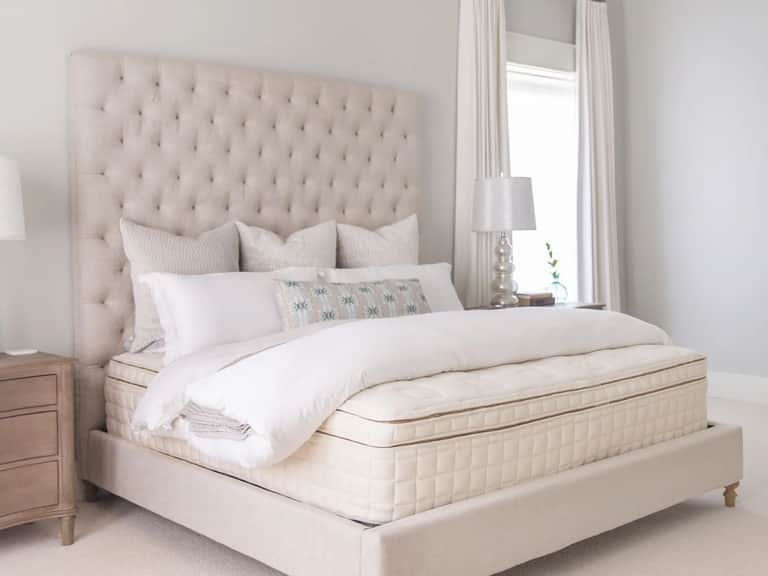
The Naturepedic EOS Pillowtop Organic Hybrid Mattress offers one example of how Dunlop latex can be used in a more complex design. Its construction includes a customizable Dunlop latex comfort layer, an additional pillowtop layer filled with Dunlop latex, and an eight-inch pocketed-coil support layer. The product information also identifies organic cotton, organic wool and other components in the mattress build.
That layered approach makes the point: “Dunlop latex mattress” may describe only part of what is happening beneath the sheet. In this example, latex contributes to the comfort layers while coils provide a separate support component. The mattress also offers firmness choices and, in larger sizes, options for adjusting each side. Those features are product-specific; they should not be assumed of every latex bed.
When looking at any comparable mattress, use the listing as a map. Identify the materials in each layer, note which elements are customizable, and check what the organic claims cover. Then consider practical details such as overall height, delivery, assembly, trial terms, layer adjustments and the foundation requirements. The construction matters, but so does whether the mattress fits your room and everyday routine.
A shopper’s checklist for natural latex mattresses
Before deciding, gather the same core information for each option. A simple checklist keeps attractive wording from overshadowing the details that determine what you are actually buying.
- Latex type: Is the material natural, synthetic or blended? Is the description tied to a particular layer?
- Process: Is the latex made using the Dunlop or Talalay method, and does the manufacturer explain what that means for the construction?
- Layer design: What are the thickness, firmness and position of each latex layer? What materials sit above and below it?
- Certification scope: Which components are certified, under which standard, and can the manufacturer provide documentation?
- Cover and quilting: What fabrics and fillings are used, and how might they affect the surface feel?
- Care: Can the cover be removed? How should spills be handled? Are rotation or other maintenance steps recommended?
- Support: What foundation is required, and are there limits on slat spacing or adjustable-base use?
- Terms: What do the warranty, trial period and layer-adjustment policies actually say?
These questions are especially helpful when two mattresses use similar language but differ substantially in construction. They also make it easier to compare a natural latex bed with other materials without treating any one category as automatically superior.
Who might appreciate Dunlop latex?
Dunlop latex may appeal to sleepers who like a responsive surface, prefer less of a slow-sinking sensation, or are interested in mattresses built with layered materials. Its feel can also be relevant to people comparing natural latex organic mattresses and looking for a clearly described alternative to conventional foam or a traditional innerspring construction.
But comfort is personal. A buoyant surface can feel pleasantly supportive to one person and too springy to another. The firmness that feels comfortable also depends on body shape, sleeping posture, personal preference and the full mattress configuration. If you share a bed, consider whether both sleepers need the same firmness and whether the design permits separate adjustment.
People with a known latex allergy should seek advice from a qualified medical professional and contact the manufacturer about the product’s materials and construction. A finished mattress may enclose its latex core, but product descriptions are not a substitute for individual medical guidance.
The bottom line
Dunlop latex is a manufacturing method used to produce resilient latex foam, often found in mattress comfort and support layers. Its lively response is a defining part of its appeal, but the word “Dunlop” alone cannot tell you how soft a mattress will feel, how long it will last, or whether its materials are organic.
For a more complete picture, compare the type and source of latex, the construction of every layer, the certifications and their scope, the foundation requirements, and the care and warranty terms. A well-described mattress makes those details understandable rather than asking you to rely on a single reassuring label.
With that information in hand, you can decide whether Dunlop’s buoyant feel and the mattress’s sourcing align with your needs. The goal is not to find a material that is universally “best,” but to choose a sleep surface whose construction, comfort and documentation make sense for the way you rest.