Mattress guide
Naturepedic Trilux: What to Check Before Choosing an Organic Latex Mattress
An organic label can be a helpful starting point, but it is not the whole story. Before choosing a Naturepedic Trilux mattress, look closely at the exact model’s materials, firmness, dimensions, certifications, and care requirements—and consider how those details fit your sleep habits and bedroom.
Published November 18, 2026
Buying a mattress is part comfort decision, part practical puzzle. How does it feel when you lie down? Will it fit the room and the bed frame? Can you move it through the hallway? What does “organic latex” mean on the product page, and which layers does that description actually cover? Those questions matter especially when you are researching a specific model such as the Naturepedic Trilux.
The most useful approach is to treat the product listing as a set of details to verify, not as a promise that every version will suit every sleeper. Mattress specifications can change, options may vary by size or model year, and words such as “natural,” “organic,” and “latex” describe different things. Reviewing the construction and documentation alongside your own comfort preferences helps turn a tempting headline into a more informed choice.
This guide walks through the checks that matter: what to confirm about the Trilux’s latex layers, how to think about firmness and support, what measurements to take, which certification details to look for, and how to compare care and warranty terms. It is not a substitute for the manufacturer’s current specifications. Use it as a practical checklist, then confirm every model-specific detail with the seller before ordering.
Start with the exact model and current specifications
First, make sure you are comparing the same product. Names can be similar across mattress collections, and a retailer’s listing may not include every available configuration. Confirm the full model name, size, height, and any firmness or construction option attached to the item you are considering. If a page is missing a detail, ask for the current specification sheet rather than relying on a summary or an older review.
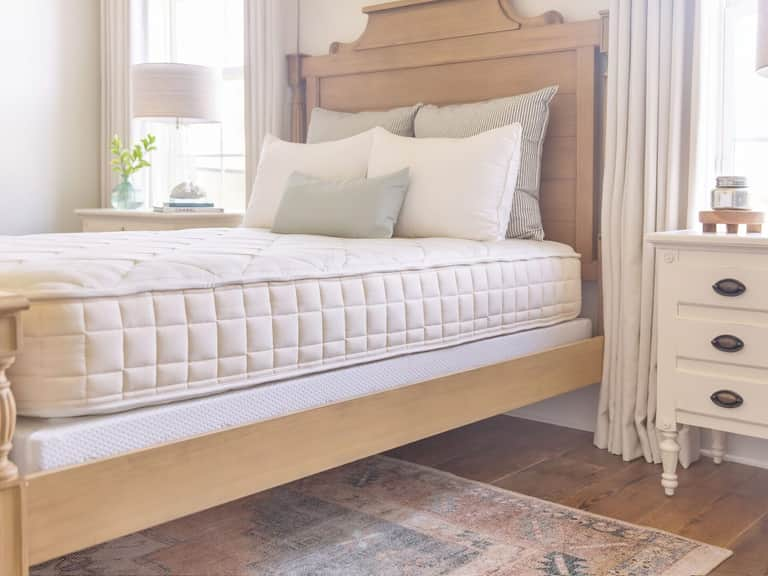
For the Naturepedic Trilux, begin by checking the materials listed for each layer. Look for a clear breakdown of the cover, comfort layers, support layers, and any adhesives, barriers, or fire-safety components identified in the documentation. The amount of useful detail matters: a phrase such as “latex mattress” tells you the general category, but not the latex type, its position in the mattress, or the rest of the construction.
It can also help to compare the manufacturer’s page with the retailer’s information. If the descriptions differ, note the discrepancy and ask which version is being sold. Product pages sometimes use abbreviated descriptions, and specification gaps are not a good place to guess. Keep a copy of the listing or written answers so you can refer back to the precise model and terms later.
- Confirm the exact product name and model configuration.
- Check the mattress height and the materials stated for each layer.
- Ask whether construction or specifications vary by size.
- Verify that the listing describes the product currently available, not a previous version.
Understand what “organic latex” does—and does not—tell you
Latex mattresses can differ in the source and processing of their latex, the way the foam is made, and how it is combined with other materials. The label “organic latex” should prompt a closer look at the supporting information: Which component is certified? Does the claim apply to the latex alone, or to a broader part of the finished mattress? What documentation identifies the certifier and the scope of the certification?
Read claims with care. A mattress may include an organic component without every material in the entire product being organic. Likewise, a certification for a textile or a particular ingredient does not automatically certify every layer or the finished mattress as a whole. Check the precise wording on the product page and, where available, follow it through to the certification details. A meaningful claim should be specific enough for you to understand what has been evaluated.
It is also useful to distinguish an organic claim from other material or emissions claims. Different standards address different questions. One may concern how an agricultural material was produced; another may address chemical content or emissions. Neither should be assumed to prove every quality a shopper might care about. Look up the standard named by the manufacturer, check what it covers, and confirm that its scope matches the claim you are assessing.
For shoppers choosing an organic latex mattress because of allergies or sensitivities, the materials list deserves particular attention. “Natural” or “organic” does not mean a product is guaranteed to be allergy-proof or appropriate for every person. If you have a known sensitivity, ask about the specific materials and consult a qualified health professional when necessary.
Compare firmness with your real sleep preferences
Firmness labels are useful shorthand, but they are not universal measurements. A mattress described as medium or firm may feel different depending on a sleeper’s body shape, weight, preferred position, and the bed underneath it. The same surface can feel more yielding to one person and more supportive to another. That is why a number or label should be a starting point—not a verdict.
Think about the position you actually spend most of the night in, rather than the one you imagine you should choose for mattress shopping. Side sleepers often pay close attention to pressure around the shoulder and hip. Back sleepers may focus on whether the surface feels even and comfortable across the body. Stomach sleepers may want to consider whether the mattress allows their middle to sink in more than feels comfortable. These are general considerations, not guarantees about how a particular model will feel.
Support and surface comfort are related, but they are not identical. A mattress can feel plush at first contact while still being designed to provide support underneath; conversely, a firm first impression does not automatically mean it will feel comfortable through the night. If possible, use an in-person trial to lie in your usual sleep position for more than a quick moment. Pay attention to pressure, ease of changing position, and whether you feel comfortably supported.
For a shared bed, include both sleepers in the decision. Differences in preferred firmness, body weight, sleep position, and sensitivity to movement can make one person’s ideal mattress a compromise for the other. Discuss what each of you notices on your current bed. Ask whether the Trilux has selectable firmness configurations, and confirm whether those options are available in the size you want. Do not assume that a range exists unless it appears in current product information.
- Identify your main sleep position and any areas where you commonly feel pressure.
- Consider how your current mattress feels, including what you would change.
- If sharing the bed, discuss both sleepers’ comfort preferences.
- Check the trial, return, or exchange terms before treating an at-home test as risk-free.
Measure the room, frame, and route into the home
Mattress size is about more than the label on the box. Check the listed width, length, and height for the exact size you plan to order. Then measure the bed frame or foundation, including any platform, slat spacing, or other support requirements specified by the manufacturer. A mattress that technically fits the frame can still sit too high once you add a topper or a thick mattress protector.
Measure the route the mattress will travel: entry doors, narrow hallways, stair turns, elevators, and bedroom doorways. If the mattress is shipped compressed, confirm how it is packaged and whether the delivery route or setup instructions involve special considerations. Do not assume a boxed mattress is easy to maneuver in every home. Consider who will carry it, where it will be opened, and whether the package needs to pass through a tight turn.
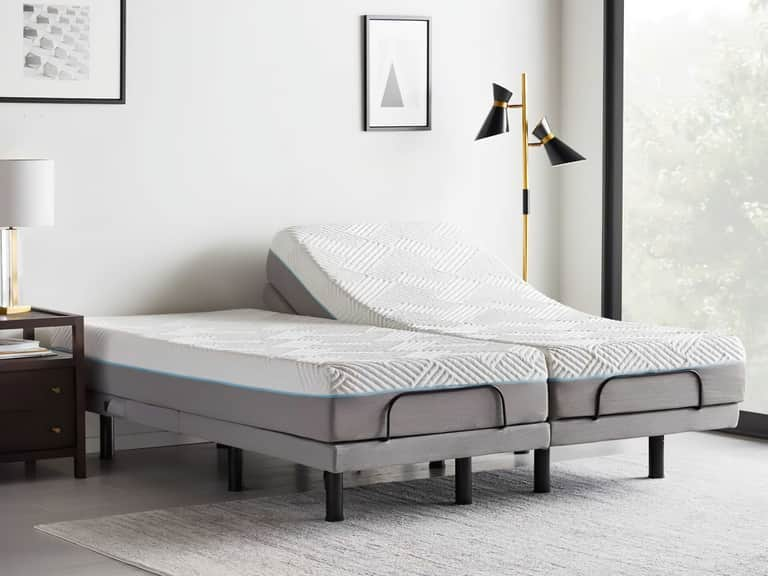
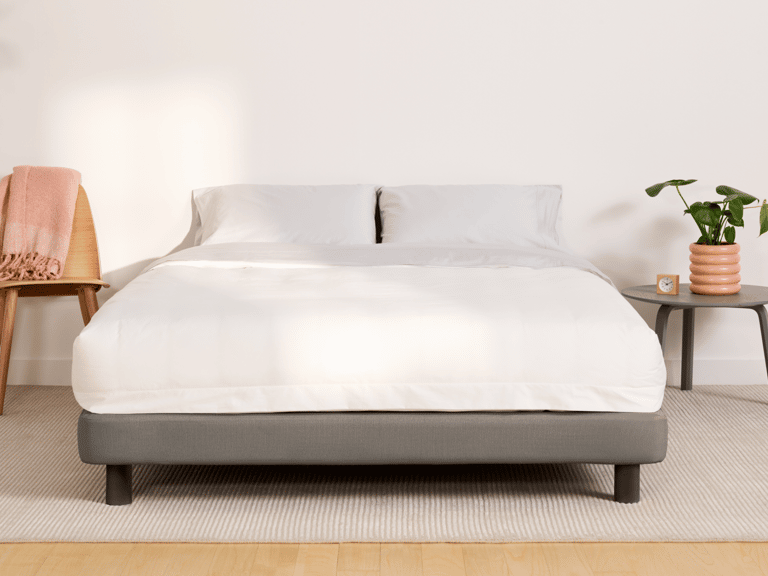
Foundation compatibility is another important check. Confirm that the support surface is suitable for the mattress and that the frame’s dimensions align with the mattress size. A bed base is not merely decorative: the wrong support arrangement may affect performance and could have implications for the warranty. Follow the manufacturer’s guidance about the type of foundation, slats, or adjustable base permitted for the specific model.
Before ordering, consider the overall bedroom setup too. A taller mattress may change the height of the bed and the reach to a nightstand. A new mattress can also affect fitted-sheet fit, especially if you use a topper. Checking these practical details in advance can prevent a comfortable choice from becoming an awkward fit.
Look beyond the headline certification
Certification names can look reassuring, but their value depends on what they certify. When a Naturepedic Trilux listing mentions a standard or certification, verify the exact name, the issuing organization, and the materials or product category covered. If a document is available, check that the product and component match the version you are buying. A logo without clear context is less informative than an explanation of its scope.
Keep separate questions separate. A certification may address agricultural practices, textile processing, chemical restrictions, or emissions, for example. It does not necessarily answer whether a mattress feels comfortable, lasts well, or suits your body. Those are different parts of the decision, and each deserves its own evidence: specifications for materials, warranty terms for coverage, and a trial or in-person assessment for comfort.
Families shopping for an infant or child should not treat adult mattress guidance as a substitute for age-specific safety recommendations. Confirm that any product is intended for the user and setting in question, and follow current safe-sleep guidance from qualified authorities. Organic materials are not, on their own, a measure of whether a sleep surface is appropriate for an infant.
Ask about care before the first night
Maintenance needs can shape the day-to-day experience just as much as the materials. Check whether the mattress cover is removable, whether it may be washed, and which cleaning methods are permitted. Do not assume that a zippered cover is designed to come off for laundering. Removing or washing a cover against the manufacturer’s instructions could damage it or affect warranty eligibility.
Ask how to handle ordinary spills, dust, and routine upkeep. A mattress protector can help shield a surface from everyday wear, but its fit and material may change the feel of the bed. If you use a protector, check that it fits the mattress depth and does not bunch or pull at the corners. Choose care instructions that match the protector’s own label rather than applying the mattress manufacturer’s cleaning guidance to a separate bedding item.
Latex mattress components can be substantial, and moving or rotating a mattress may take planning. Confirm whether the specific model is designed to be rotated, whether it has a designated top and bottom, and whether turning it over is appropriate. Some mattresses are not reversible. Follow the current care guide instead of assuming that familiar routines for an older bed apply to a new one.
Delivery and setup details belong in this conversation, too. Find out whether the mattress arrives compressed, how long setup takes, and whether there are instructions about allowing it to settle before use. If the mattress is heavy or difficult to maneuver, decide in advance whether you will need help. A little preparation makes the transition smoother and reduces the chance of damage during setup.
Read the warranty, trial, and return terms closely
A warranty is not the same as a promise that a mattress will feel comfortable for its entire life. It usually describes specific conditions and types of defects, along with exclusions and requirements. Read the full terms for the exact model. Pay attention to the warranty length, what counts as a covered issue, how claims are assessed, and whether the original receipt or other records are required.
Check what the warranty says about the foundation, frame, and mattress care. Some warranties require a particular support setup or exclude damage caused by improper handling, stains, or unauthorized alterations. The details vary, so do not rely on a general description such as “limited warranty.” Save the product specification, purchase confirmation, and care instructions in one place.
A sleep trial or return window is a separate policy. Confirm when the trial begins, whether there is a required break-in period, how a return must be arranged, and whether pickup or other fees apply. Ask whether the policy changes for certain sizes or delivery methods. These terms can make a real difference if the firmness does not work in your home, so review them before purchase rather than after the mattress arrives.
A practical comparison checklist
When you have the product page open, use a short checklist to keep the decision grounded. The goal is not to find the most impressive collection of claims. It is to establish whether the model’s documented details match your needs and whether any important question remains unanswered.
- Model: Is this the current Naturepedic Trilux configuration, in the size and version you intend to order?
- Materials: Are the cover and every listed layer clearly identified?
- Organic claims: Which materials or parts of the product are certified, and by whom?
- Feel: Do the firmness options and available trial arrangements suit your way of testing comfort?
- Fit: Will the dimensions work with your frame, room, sheets, and delivery route?
- Care: Are cleaning, rotation, and handling instructions practical for your household?
- Coverage: Have you read the warranty, return, and exchange conditions in full?
- Support: Does your foundation meet the requirements stated for the mattress?
The bottom line on the Naturepedic Trilux
The Naturepedic Trilux may be worth investigating if you are considering an organic latex mattress, but the name alone cannot tell you whether it is the right fit. Start with the current product specifications. Verify the latex and other materials, interpret certifications according to their stated scope, and compare the available firmness and size options with your sleeping habits and bedroom setup.
Then give equal attention to the less glamorous details: foundation requirements, cleaning instructions, delivery logistics, warranty coverage, and the return policy. These details help reveal how the mattress will work in everyday life—not just how it reads in a product description. If something important is unclear, ask for a direct answer before ordering.
In the end, the best mattress choice is not defined by a single label. It is the one whose documented construction, feel, dimensions, and practical terms make sense for the people who will sleep on it. A little careful checking now can make the decision feel less like guesswork and more like a thoughtful step toward a bedroom that works for you.